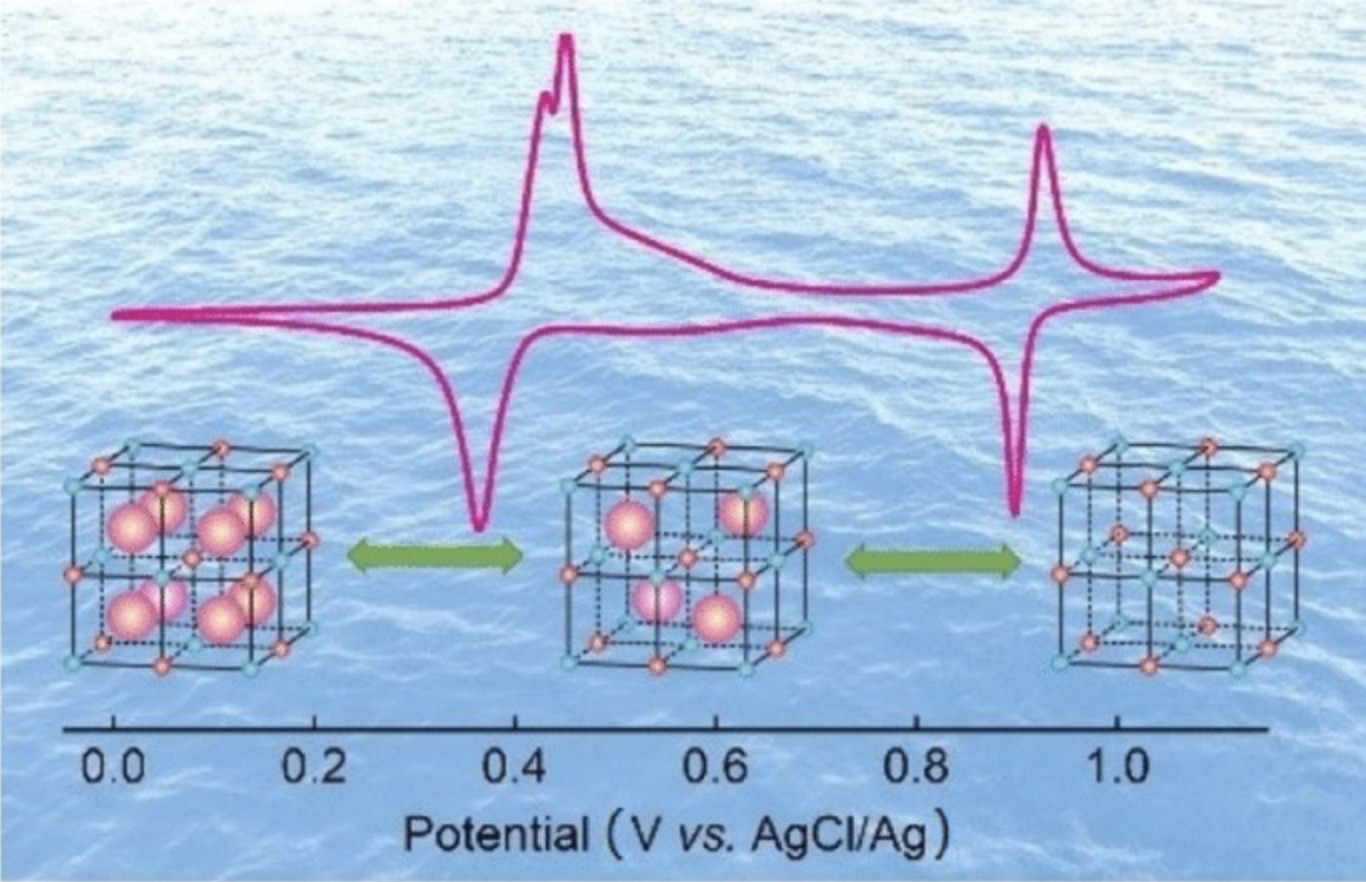
Aqueous batteries have engendered increasing attention as promising solutions for stationary energy storage due to their potentially low cost and innate safety. In various aqueous battery systems, Prussian blue analogues (PBAs) represent a class of promising electrode materials with fascinating electrochemical performance, owing to their large open frameworks, abundant ion insertion sites, and facile preparation. To date, PBAs have shown substantial progress towards storage of alkali metal ions (Li+, Na+, and K+), H+, and NH4+ in aqueous electrolytes, which, however, has yet not been specifically summarized. This review selects some representative research to introduce the progress of PBAs in these battery systems and aims to discuss the crucial role of ionic charge carrier in affecting the overall electrode performance. Besides, some critical knowledge gaps and challenges of PBA materials have been pointed out for future development.
Shen Qiu
,
Yunkai Xu
,
Xianyong Wu
,
Xiulei Ji
. Prussian Blue Analogues as Electrodes for Aqueous Monovalent Ion Batteries[J]. Electrochemical Energy Reviews, 2022
, 5(2)
: 242
-262
.
DOI: 10.1007/s41918-020-00088-x