High-Loading Dry-Electrode for all Solid-State Batteries: Nanoarchitectonic Strategies and Emerging Applications

Expand
  • 1. Institute for Superconducting & Electronic Materials (ISEM), Faculty of Engineering and Information Sciences, University of Wollongong, Squires Way, North Wollongong, NSW 2500, Australia;
    2. Department of Advanced Materials Engineering for Information and Electronics, Integrated Education Institute for Frontier Science & Technology (BK21 Four), Kyung Hee University, 1732 Deogyeong-daero, Giheung-gu, Yongin 17104, Republic of Korea

Received date: 2024-03-24

  Revised date: 2024-12-07

  Online published: 2025-03-29

Supported by

This work was supported by ARC National Intelligence and Security Discovery Research Grants (NI240100355). This research was also supported by the National Research Foundation (NRF-2022M3J1A1085402) of the Ministry of Science and ICT of the Republic of Korea.
Abstract

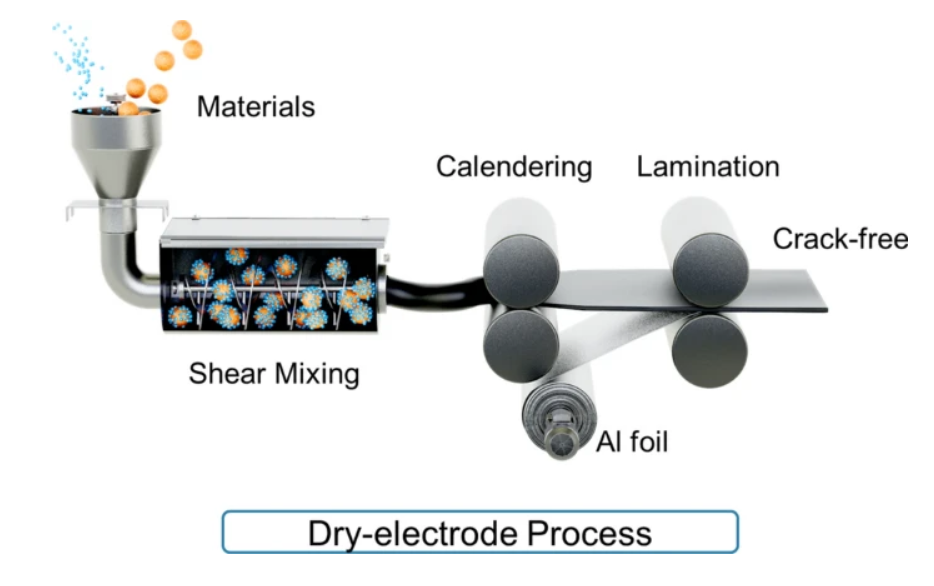
Current battery research is primarily directed towards enhancing productivity optimization, reducing energy consumption, and improving battery performance, especially in addressing the hurdles of state-of-the-art battery production. The achievement of batteries with simultaneous high safety and energy density relies on the advancement of all-solid-state batteries utilizing robust solid electrodes and thin solid electrolytes. To achieve this, different electrode manufacturing processes from conventional techniques are required. Dry-electrode technology is an innovative concept and technique that enables the manufacture of electrodes through a "powder-film" route without the use of solvents. Dry-electrode technology can simplify manufacturing processes, restructure electrode microstructures, and enhance material compatibility. This review summarizes the concept and advantages of dry-electrode technology and discusses various efforts towards performance and efficiency enhancement. Dry-electrode technology is expected to contribute to the production capability of the next-generation battery industry with improved stability and energy density, promising a sustainable future.

Cite this article

Sang A Han, Joo Hyeong Suh, Min-Sik Park, Jung Ho Kim . High-Loading Dry-Electrode for all Solid-State Batteries: Nanoarchitectonic Strategies and Emerging Applications[J]. Electrochemical Energy Reviews, 2025 , 8(1) : 5 . DOI: 10.1007/s41918-025-00240-5

Options
Outlines

/