The Recycling of Spent Lithium-Ion Batteries: a Review of Current Processes and Technologies

Expand
  • 1 Beijing Key Laboratory of Environmental Science and Engineering, School of Materials Science and Engineering, Beijing Institute of Technology, Beijing 100081, China;
    2 Chemical Sciences and Engineering Division, Argonne National Laboratory, Lemont, IL 60439, USA;
    3 Institute for Research and Medical Consultations, Imam Abdulrahman Bin Faisal University, Dammam 34212, Saudi Arabia;
    4 Material Science and Engineering, Stanford University, Stanford, CA 94305, USA

Received date: 2018-04-04

  Revised date: 2018-06-19

  Online published: 2018-11-30

Supported by

This work was supported by the Chinese National 973 Program (2015CB251106), the Joint Funds of the National Natural Science Foundation of China (U1564206), and the Major Achievements Transformation Project for Central University in Beijing.
Abstract

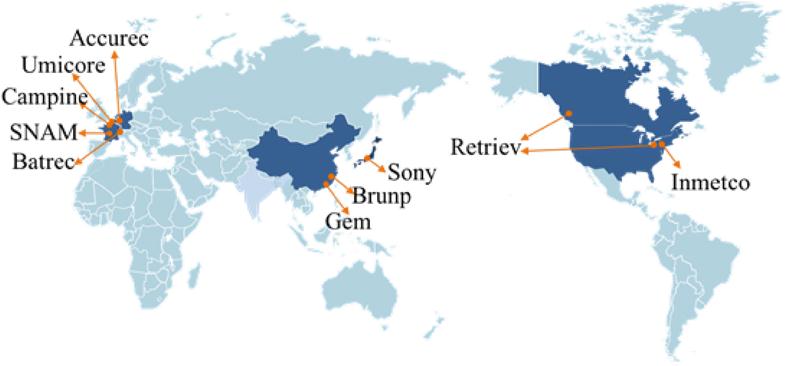
The application of lithium-ion batteries (LIBs) in consumer electronics and electric vehicles has been growing rapidly in recent years. This increased demand has greatly stimulated lithium-ion battery production, which subsequently has led to greatly increased quantities of spent LIBs. Because of this, considerable eforts are underway to minimize environmental pollution and reuse battery components. This article will review the current status of the main recycling processes for spent LIBs, including laboratory-and industrial-scale recycling processes. In addition, a brief review of the design and reaction mechanisms of LIBs will be provided, and typical physical, chemical, and bioleaching recycling processes will be discussed. The signifcance of recycling will also be emphasized in terms of economic benefts and environmental protection. Furthermore, due to the unprecedented development of electric vehicles, large quantities of retired power batteries are predicated to appear in the near future. And because of this, secondary uses of these retired power batteries will be discussed from an economic, technical, and environmental perspective. Finally, potential problems and challenges of current recycling processes and prospects of key recycling technologies will be addressed.

Full-text:https://link.springer.com/article/10.1007/s41918-018-0012-1

Cite this article

Li Li, Xiaoxiao Zhang, Matthew Li, Renjie Chen, Feng Wu, Khalil Amine, Jun Lu . The Recycling of Spent Lithium-Ion Batteries: a Review of Current Processes and Technologies[J]. Electrochemical Energy Reviews, 2018 , 1(4) : 461 -482 . DOI: 10.1007/s41918-018-0012-1

Options
Outlines

/